The Month Of Ramadan:
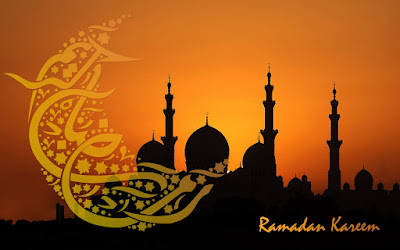
Ramadan is the ninth month of the Islamic calendar, and is observed by Muslims worldwide as a month of fasting.
This annual observance is regarded as one of the Five Pillars of Islam. The month lasts 29�30 days based on the visual sightings of the crescent moon, according to numerous biographical accounts compiled in the hadiths.
The word Ramadan comes from the Arabic root rami?a or ar-rama?, which means scorching heat or dryness.
10 Ramadan Quotes, Ramadan Images and Quotes,Perfect Quotes for Ramadan
Fasting:

Fasting is fardh ("obligatory") for adult Muslims, except those who are suffering from an illness, traveling, are elderly, pregnant, breastfeeding, diabetic or going through menstrual bleeding. Fasting the month of Ramadan was made obligatory (w?jib) during the month of Sha'aban, in the second year after the Muslims migrated from Mecca to Medina. Fatwas have been issued declaring that Muslims who live in regions with natural phenomenon such as the midnight sun or polar night should follow the timetable of Mecca.
While fasting from dawn until sunset, Muslims refrain from consuming food, drinking liquids, smoking, and engaging in sexual relations; in some interpretations, Muslims also refrain from other behavior that could be perceived as sinful, such as swearing, engaging in disagreements, backbiting and procrastination. Food and drink is served daily, before dawn and after sunset. Spiritual rewards thawab for fasting are also believed to be multiplied within the month of Ramadan. Fasting for Muslims during Ramadan typically includes the increased offering of salat (prayers) and recitation of the Qur'an.
Suhoor:
Each day, before dawn, many Muslims observe a pre-fast meal called the suhoor. After stopping a short time before dawn, Muslims begin the first prayer of the day, Fajr. At sunset, families hasten for the fast-breaking meal known as iftar.
Iftar:
In the evening, dates are usually the first food to break the fast; according to tradition, Muhammad (P.B.U.H) broke fast with three dates. Following that, Muslims generally adjourn for the Maghrib prayer, the fourth of the five daily prayers, after which the main meal is served.
Social gatherings, many times in a buffet style, are frequent at iftar. Traditional dishes are often highlighted, including traditional desserts, and particularly those made only during Ramadan. Water is usually the beverage of choice, but juice and milk are also often available, as are soft drinks and caffeinated beverages.
Zakat and Sadaqah:
Charity is very important in Islam, and even more so during Ramadan. Zak?t, often translated as "the poor-rate", is obligatory as one of the pillars of Islam; a fixed percentage of the person's savings is required to be given to the poor.
Sadaqah is voluntary charity in giving above and beyond what is required from the obligation of zak?t. In Islam, all good deeds are more handsomely rewarded in Ramadan than in any other month of the year. Consequently, many will choose this time to give a larger portion, if not all, of the zak?t that they are obligated to give. In addition, many will also use this time to give a larger portion of sadaqah in order to maximize the reward that will await them at the Last Judgment.
Tarawih:
Tarawih (Arabic: ������) refers to extra prayers performed by Muslims at night in the Islamic month of Ramadan. Contrary to popular belief, they are not compulsory. However, many Muslims pray these prayers in the evening during Ramadan. Some scholars[who?] maintain that Tarawih is neither fard or a Sunnah, but is the preponed Tahajjud (night prayer) prayer shifted to post-Isha' for the ease of believers. But a majority of Sunni scholars regard the Tarawih prayers as Sunnat al-Mu'akkadah, a salaat that was performed by the Islamic prophet Muhammad very consistently.
Recitation of the Quran:
In addition to fasting, Muslims are encouraged to read the entire Quran. Some Muslims perform the recitation of the entire Quran by means of special prayers, called Tarawih. These voluntary prayers are held in the mosques every night of the month, during which a whole section of the Quran (juz', which is 1/30 of the Quran) is recited. Therefore, the entire Quran would be completed at the end of the month. Although it is not required to read the whole Quran in the Tarawih prayers, it is common.
In the Quran:

Chapter 2, Revelation 185, of the Quran states:
The month of Ramadan is that in which was revealed the Quran; a guidance for mankind, and clear proofs of the guidance, and the criterion (of right and wrong). And whosoever of you is present, let him fast the month, and whosoever of you is sick or on a journey, a number of other days. Allah desires for you ease; He desires not hardship for you; and that you should complete the period, and that you should magnify Allah for having guided you, and that perhaps you may be thankful.[Quran 2:185]
Thus, according to the Quran, Muhammad (P.B.U.H) first received revelations in the lunar month of Ramadan. Therefore, the month of Ramadan is considered to be the most sacred month of the Islamic calendar, the recording of which began with the Hijra.
According to the Quran, fasting was also obligatory for prior nations of Islamic prophets and it should be noted that even the pagans of Arabia used to observe fasting prior to Islamic tradition.
It is believed that the first revelation to Muhammad (P.B.U.H) was sent down during the month of Ramadan. Furthermore, God proclaimed to Muhammad (P.B.U.H) that fasting for His sake was not a new innovation in monotheism, but rather an obligation practiced by those truly devoted to the oneness of God.
Laylat al-Qadr:

Laylat al-Qadr, which in Arabic means "the night of power" or "the night of decree", is considered the holiest night of the year. This is the night in which Quran was sent down to Muhammad (P.B.U.H) stating that this night was "better than one thousand months [of proper worship], as stated in Chapter 97:3 of the Qu'ran.
Also, generally, Laylat al-Qadr is believed to have occurred on an odd-numbered night during the last ten days of Ramadan, i.e., the night of the 21st, 23rd, 25th, 27th or 29th.

Ramadan is the ninth month of the Islamic calendar, and is observed by Muslims worldwide as a month of fasting.
This annual observance is regarded as one of the Five Pillars of Islam. The month lasts 29�30 days based on the visual sightings of the crescent moon, according to numerous biographical accounts compiled in the hadiths.
The word Ramadan comes from the Arabic root rami?a or ar-rama?, which means scorching heat or dryness.
10 Ramadan Quotes, Ramadan Images and Quotes,Perfect Quotes for Ramadan
Fasting:

Fasting is fardh ("obligatory") for adult Muslims, except those who are suffering from an illness, traveling, are elderly, pregnant, breastfeeding, diabetic or going through menstrual bleeding. Fasting the month of Ramadan was made obligatory (w?jib) during the month of Sha'aban, in the second year after the Muslims migrated from Mecca to Medina. Fatwas have been issued declaring that Muslims who live in regions with natural phenomenon such as the midnight sun or polar night should follow the timetable of Mecca.
While fasting from dawn until sunset, Muslims refrain from consuming food, drinking liquids, smoking, and engaging in sexual relations; in some interpretations, Muslims also refrain from other behavior that could be perceived as sinful, such as swearing, engaging in disagreements, backbiting and procrastination. Food and drink is served daily, before dawn and after sunset. Spiritual rewards thawab for fasting are also believed to be multiplied within the month of Ramadan. Fasting for Muslims during Ramadan typically includes the increased offering of salat (prayers) and recitation of the Qur'an.
Suhoor:
Each day, before dawn, many Muslims observe a pre-fast meal called the suhoor. After stopping a short time before dawn, Muslims begin the first prayer of the day, Fajr. At sunset, families hasten for the fast-breaking meal known as iftar.
Iftar:
In the evening, dates are usually the first food to break the fast; according to tradition, Muhammad (P.B.U.H) broke fast with three dates. Following that, Muslims generally adjourn for the Maghrib prayer, the fourth of the five daily prayers, after which the main meal is served.
Social gatherings, many times in a buffet style, are frequent at iftar. Traditional dishes are often highlighted, including traditional desserts, and particularly those made only during Ramadan. Water is usually the beverage of choice, but juice and milk are also often available, as are soft drinks and caffeinated beverages.
Zakat and Sadaqah:
Charity is very important in Islam, and even more so during Ramadan. Zak?t, often translated as "the poor-rate", is obligatory as one of the pillars of Islam; a fixed percentage of the person's savings is required to be given to the poor.
Sadaqah is voluntary charity in giving above and beyond what is required from the obligation of zak?t. In Islam, all good deeds are more handsomely rewarded in Ramadan than in any other month of the year. Consequently, many will choose this time to give a larger portion, if not all, of the zak?t that they are obligated to give. In addition, many will also use this time to give a larger portion of sadaqah in order to maximize the reward that will await them at the Last Judgment.
Tarawih:
Tarawih (Arabic: ������) refers to extra prayers performed by Muslims at night in the Islamic month of Ramadan. Contrary to popular belief, they are not compulsory. However, many Muslims pray these prayers in the evening during Ramadan. Some scholars[who?] maintain that Tarawih is neither fard or a Sunnah, but is the preponed Tahajjud (night prayer) prayer shifted to post-Isha' for the ease of believers. But a majority of Sunni scholars regard the Tarawih prayers as Sunnat al-Mu'akkadah, a salaat that was performed by the Islamic prophet Muhammad very consistently.
Recitation of the Quran:
In addition to fasting, Muslims are encouraged to read the entire Quran. Some Muslims perform the recitation of the entire Quran by means of special prayers, called Tarawih. These voluntary prayers are held in the mosques every night of the month, during which a whole section of the Quran (juz', which is 1/30 of the Quran) is recited. Therefore, the entire Quran would be completed at the end of the month. Although it is not required to read the whole Quran in the Tarawih prayers, it is common.
In the Quran:

The month of Ramadan is that in which was revealed the Quran; a guidance for mankind, and clear proofs of the guidance, and the criterion (of right and wrong). And whosoever of you is present, let him fast the month, and whosoever of you is sick or on a journey, a number of other days. Allah desires for you ease; He desires not hardship for you; and that you should complete the period, and that you should magnify Allah for having guided you, and that perhaps you may be thankful.[Quran 2:185]
Thus, according to the Quran, Muhammad (P.B.U.H) first received revelations in the lunar month of Ramadan. Therefore, the month of Ramadan is considered to be the most sacred month of the Islamic calendar, the recording of which began with the Hijra.
According to the Quran, fasting was also obligatory for prior nations of Islamic prophets and it should be noted that even the pagans of Arabia used to observe fasting prior to Islamic tradition.
It is believed that the first revelation to Muhammad (P.B.U.H) was sent down during the month of Ramadan. Furthermore, God proclaimed to Muhammad (P.B.U.H) that fasting for His sake was not a new innovation in monotheism, but rather an obligation practiced by those truly devoted to the oneness of God.
Laylat al-Qadr:

Also, generally, Laylat al-Qadr is believed to have occurred on an odd-numbered night during the last ten days of Ramadan, i.e., the night of the 21st, 23rd, 25th, 27th or 29th.


